>12,500 smart card reader
In 2013, Hong Kong Police Department launched a security‑modernization initiative aimed at strengthening internal IT security and improving operational auditing. A key objective of the program was to replace password‑based identity authentication with smart‑card–based verification across the entire police network.
Coordinated by the Government Logistics Department, the project involved deploying 12,500 dual‑interface smart‑card readers throughout police stations, administrative offices, and mission‑critical terminals.
Hong Kong Police Department relied on both contact‑based ID cards and contactless credentials for identity verification and access control. Single‑interface readers could not accommodate both formats, which would have required deploying separate devices which would drive up additional costs, maintenance issues, and operational complexities.
Their need was to have an all-in-one smart card reader which supports all credential types to streamline infrastructure and reduce operational complexity.
They had operational scenarios that required different levels of security, which led us to work on a more secure yet more flexible authentication approach.
High‑security operations: system login, digital signatures, or access to sensitive applications which was to use contact‑based authentication to minimize exposure to remote or relay attacks.
Fast, frictionless workflows: building entry, attendance tracking, or routine identity checks which use contactless verification to keep daily operations efficient.
Ultimately, their requirement was a solution that could deliver both strong security and seamless user experience without forcing trade‑offs.
One of our key challenges was to develop a smart card reader that could integrate seamlessly with multiple Hong Kong Police Department IT systems while remaining flexible enough to support future policy, security, and technology updates.
To address this, we needed a solution with firmware‑upgrade capability and broad operating‑system compatibility, ensuring long‑term hardware viability and preventing premature replacement as standards evolved.
Deploying 12,500 smart card readers across police stations, administrative offices, and mission‑critical environments required a highly coordinated large‑scale rollout. To make this possible, we needed dependable logistics, strong local technical support, and a streamlined deployment process that would minimize disruption to daily police operations.
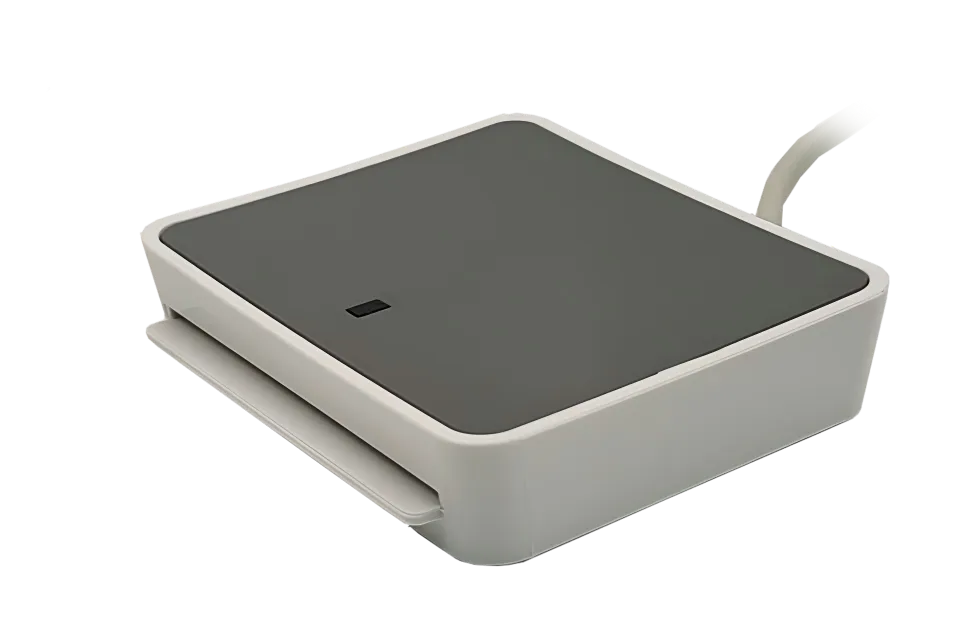
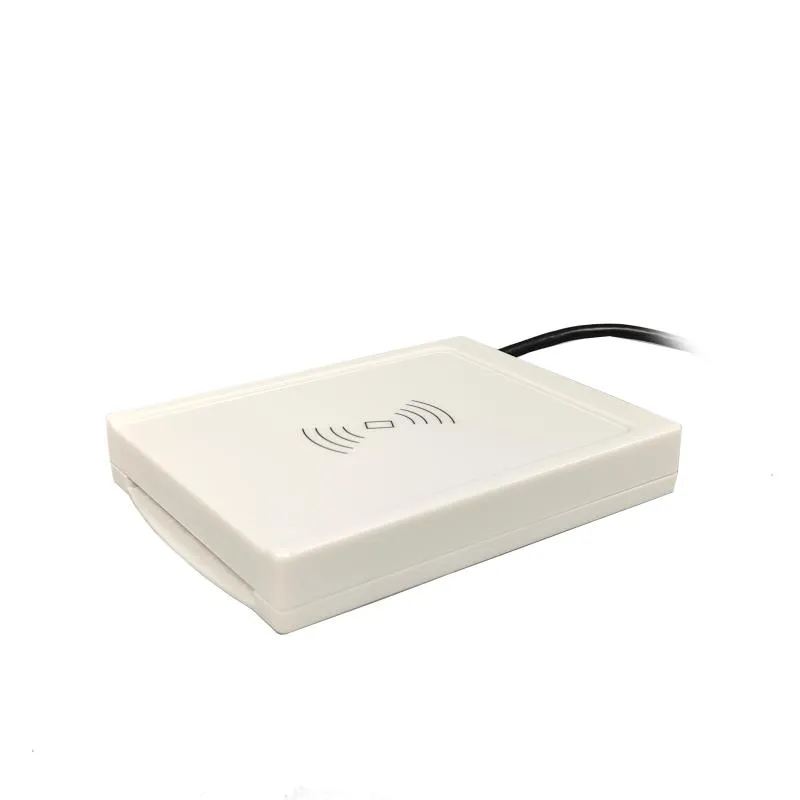
We developed the MCR2000 with PSAM functionality to provide both contact and contactless authentication within a single, integrated device. It supports ISO/IEC 7816 contact standard, ISO/IEC 14443 contactless standard, and incorporates a built‑in Secure Access Module (SAM) to enable secure cryptographic operations.
Our unified architecture allowed the Hong Kong Police Department to rely on one device for both contact ID cards and modern contactless police credentials, eliminating the need for multiple reader types and significantly simplifying deployment and maintenance across their entire network.
We designed the MCR2000 to intelligently support the Hong Kong Police Department’s diverse authentication requirements. Instead of relying on separate devices for different security levels, the MCR2000 consolidates both contact and contactless capabilities into a single platform.
Its contact interface provides a secure channel for operations that require cryptographic assurance, while the contactless interface enables rapid, touch‑free verification for high‑throughput environments. This dual‑interface design ensures every workflow can use the authentication method best suited to its security level.
Built for Easy System Integration and Future-Ready Compatibility
The MCR2000 was built to integrate smoothly with existing police IT systems while remaining flexible enough to support future requirements. It provides:
broad operating‑system compatibility,
remote firmware upgrade capability, and
seamless interoperability with established infrastructure.
Together, these capabilities enabled a smooth deployment and created a future‑ready platform that can evolve with new policies, security standards, and technology updates without the need for hardware replacement.
Smart‑card authentication replaced passwords, enabling unique identity binding, auditable access logs, and stronger protection against unauthorized access.
Dual‑interface readers supported multiple card types, reducing device variety and lowering long‑term maintenance overhead.
Contact and contactless modes worked together to streamline authentication across all scenarios, improving officer workflow speed and consistency.
All 12,500 devices were delivered and installed in Q1 2013, enabling swift enforcement of the new IT security policy and setting a benchmark for government‑grade smart‑card deployments.
 English